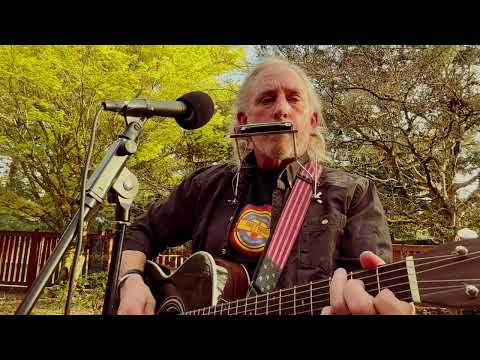

Happy Easter, Passover, and Orthodox Palm Sunday to all celebrating those occasions (or if you celebrate none at all). Spring has arrived, and whether you are marking it as part of a faith tradition or not, it is a time of renewal.
For this occasion, a song by Kris Kristofferson, recorded by him as well as by Johnny Cash and Bob Dylan (on "Knocked Out Loaded"). Kristofferson would often introduce this as "a song for the heroes of the spirit." And for sustainable change, I'm not sure there's any other kind of hero that'll do.
"They Killed Him" expresses, naturally, outrage at the murder of men who gave so much to the societies in which they lived. And righteous anger has a role to be sure. But each of them also carefully taught of the ultimate failure of malice towards others to be moral, or to be effective.
Which is why I include Lincoln here - like King and Gandhi, his life also embodied principles of moral accountability, love of enemies and willingness to suffer personally for justice; "malice toward none, charity to all," as he put it. True, King and Gandhi were fully committed to non-violence; Lincoln not quite. But I don’t think Lincoln’s choices diminish his bravery, or his wisdom, especially given the context he found himself. A verse about Obi-Wan Kenobi might have gnarled the mood of this song, but he also helps illustrate that one can wage a just war without straying from how power really operates and why violence never truly wins.
Which is also to say it is an error to think of King, Gandhi or nonviolence as without power. Jesus Christ caps Kristofferson's verses, and a myriad of Gospel stories illustrate how non-violent power works: Jesus called out authorities on their hypocrisy, he refused to accept their trick questions, and he maintained his own control and authority even when under threat. That's real power. Yes, they killed him. But the story never ends, and death does not have the last word.
One last point on this Easter weekend - rather than make up my own bit, I'm just going to copy this verbatim from the US Council of Catholic Bishops: "the crimes during the Passion of Christ cannot be attributed, in either preaching or catechesis, indiscriminately to all Jews of that time, nor to Jews today. The Jewish people should not be referred to as though rejected or cursed, as if this view followed from Scripture. The Church ever keeps in mind that Jesus, his mother Mary, and the apostles all were Jewish."
It's in part from love and respect for Judaism that I added a lyric about justice rolling down like a mighty river - a line rightly attributed to Dr. King, but which was coined by the Old Testament prophet Amos, another man uncompromising in flagging hypocrisy and calling for justice. And for that, they killed him too.
For this occasion, a song by Kris Kristofferson, recorded by him as well as by Johnny Cash and Bob Dylan (on "Knocked Out Loaded"). Kristofferson would often introduce this as "a song for the heroes of the spirit." And for sustainable change, I'm not sure there's any other kind of hero that'll do.
"They Killed Him" expresses, naturally, outrage at the murder of men who gave so much to the societies in which they lived. And righteous anger has a role to be sure. But each of them also carefully taught of the ultimate failure of malice towards others to be moral, or to be effective.
Which is why I include Lincoln here - like King and Gandhi, his life also embodied principles of moral accountability, love of enemies and willingness to suffer personally for justice; "malice toward none, charity to all," as he put it. True, King and Gandhi were fully committed to non-violence; Lincoln not quite. But I don’t think Lincoln’s choices diminish his bravery, or his wisdom, especially given the context he found himself. A verse about Obi-Wan Kenobi might have gnarled the mood of this song, but he also helps illustrate that one can wage a just war without straying from how power really operates and why violence never truly wins.
Which is also to say it is an error to think of King, Gandhi or nonviolence as without power. Jesus Christ caps Kristofferson's verses, and a myriad of Gospel stories illustrate how non-violent power works: Jesus called out authorities on their hypocrisy, he refused to accept their trick questions, and he maintained his own control and authority even when under threat. That's real power. Yes, they killed him. But the story never ends, and death does not have the last word.
One last point on this Easter weekend - rather than make up my own bit, I'm just going to copy this verbatim from the US Council of Catholic Bishops: "the crimes during the Passion of Christ cannot be attributed, in either preaching or catechesis, indiscriminately to all Jews of that time, nor to Jews today. The Jewish people should not be referred to as though rejected or cursed, as if this view followed from Scripture. The Church ever keeps in mind that Jesus, his mother Mary, and the apostles all were Jewish."
It's in part from love and respect for Judaism that I added a lyric about justice rolling down like a mighty river - a line rightly attributed to Dr. King, but which was coined by the Old Testament prophet Amos, another man uncompromising in flagging hypocrisy and calling for justice. And for that, they killed him too.
- Category
- Kris Kristofferson
Commenting disabled.
Up Next
-
04:48

How Trudy Was Killed | Monk
-
33:18
THEY KILLED HIM!!!
-
16:10
They killed my brother! Then we killed them ????
-
00:35
Kris Kristofferson - They Killed Him
-
05:13
Her Son Killed A Man But She's Mad At The Media
-
Willie Nelson Kicked Off The View After Heated Clash With Joy Behar
-
TOP 5 Smallest Countries in The World
-
MO'UNGA KULA
-
Remove LG 10 Year Warranty Appliance Stickers Easy
-
06:24

Jelly Roll & Dolly Parton - Walk Me Home LORD (New Country Gospel Song Tribute 2026)